Is software-defined router the next step towards digital transformation? The simplest answer is yes. We can observe that through the years, data, voice, and video traffic passing through the network have grown swiftly. This era of information revolution shows the continuous growth of explosive data not only in LAN (Local Area Network) but also in WAN (Wide Area Network). These add up to the realization of developers that the advancement of cloud computing, big data analytics, internet-of-things now have preeminent demands for the network today. It needs to be more adaptable, scalable, secured, but above all, it needs to be programmable.
With the recent developments of technologies, the network has evolved tremendously and is not anymore bounded by physical location. What used to be only limited in corporate offices and remote branches can now be extended to our homes and residing areas of mobile workers. This huge step into a more modernized and digitalized age is through the creation of new network infrastructures and software architectures. Thus, network virtualization emerged and is now one of the most prominent global digital transformations to date.
Research has proven that network virtualization can diversify the future Internet architecture according to the requirements of the end-user. These requirements include 1) the needs of different network applications, 2) the need for an environment that can support developing new commands and protocols, as well as 3) the need to adapt to constant traffic surges. One of the network’s components that needs to process more and more traffic and to adapt to the increases in bandwidth and port speed is a router.
As the world continues to move away from the traditional hardware-centric enterprise router functionalities, it leaves the routers in data centers, head offices, branches, and remote locations outdated. As service providers continue to discover how the network edge will evolve, it has become clear that IP (internet protocol) and routing will be needed very close to the end-user. It is also a fact that routers are needed to cost much less but perform a lot more.
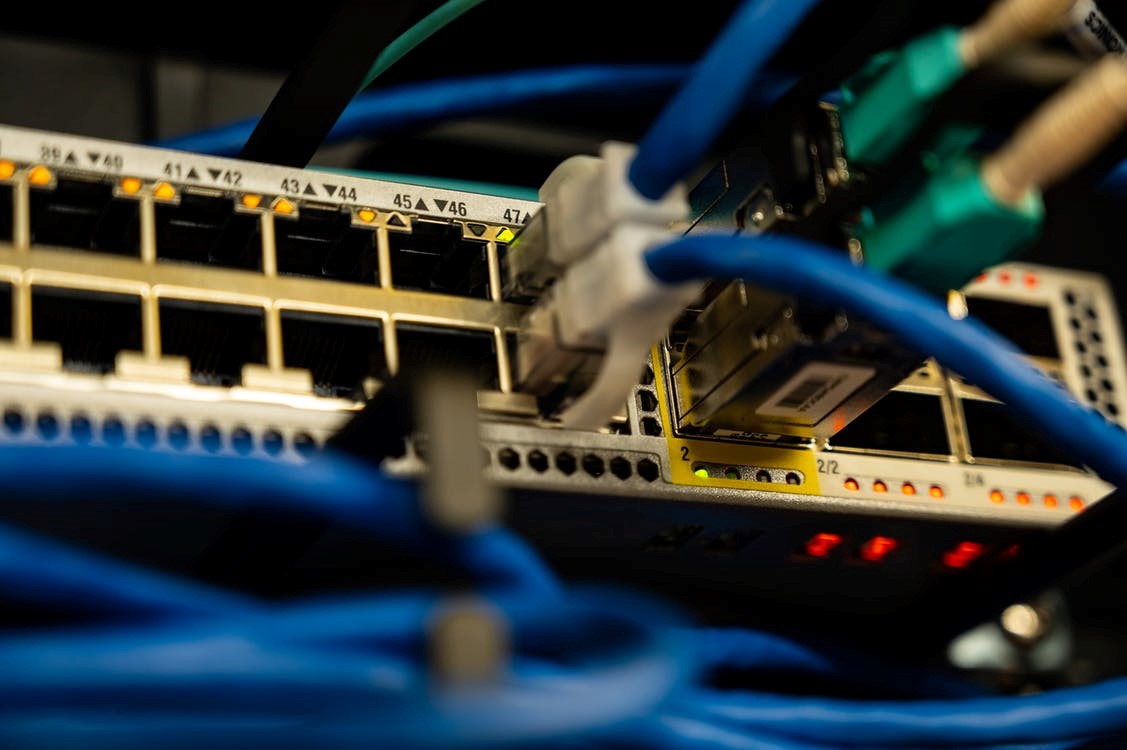
Soon, these routers would need to get upgraded to keep up with this fast-changing digital age. However, the traditional hardware-centric routers that are used and deployed today are very costly to upgrade. It’s not programmable to cope up with the ever-evolving needs of modern IT systems as well as the demands from businesses, users, and applications. Thus, virtual routers are one of the proposed solutions.
Virtual routers (software) and physical routers (hardware) are the same in terms of its role in being an access point for communication between the end-user and other networks. The difference is that a virtual router (VR) is a software-based routing framework, wherein the functions of traditional hardware-centric network appliances and routers are converted to software that can already run on standard commercial off-the-shelf (COTS) hardware. This means that it allows the host machine to perform just like a typical hardware router over a LAN or WAN, enabling a server to perform network and packet routing. Because of this evolution, routing functions can now be dynamically configured to the network’s needs.

Several telecommunication operators and other companies from diverse industries have already started to adopt network virtualization using Software-Defined Networking (SDN). It is an emerging architecture that is dynamic, manageable, cost-effective, and adaptable and is now ideal for the high-bandwidth, dynamic nature of today’s applications. The key advantages of a software-defined router are outstanding. It’s easy to use, brings more power, and allows them to achieve high efficiency, quality performance, and capabilities at a reduced total cost of ownership (TCO) to almost 90%.
Bastion Payment Systems, a business-to-business financial technology company that offers business solutions including Future Technologies, is already launching the Bastion Software-Defined Router (SDR) here in the Philippines. Its goal is to provide businesses high-performance, highly customizable hosting, cutting edge technology at a reasonable price. It is designed to have a simple transition from hardware to software, eliminating the problem of having costly upgrades.
The Bastion SDR shows outstanding performance and capabilities.
With the converged network that we have now, data, voice, and video are traversing on the same pipe of WAN links. The Bastion Router:
- Can prioritize mission-critical applications over the other applications and services.
- Has rich features of new trends in LAN and WAN to cater to the demands of applications and users.
- Has the right specs for CPU and memory to process a sudden or sustained peak of traffic driven by business needs.
- Has the ability for 16 million packets per second per core of IP Forwarding performance.
The Bastion SDR is agile and scalable.
It is built in the principles of Software-Defined Networking (SDN). The Bastion Router:
- Has linear performance scalability from 1G to 100G with the number of cores deployed.
- Provides scalable, cost-effective IP routing, IPsec VPNs, and CG-NAT solutions.
- Has full-featured data plane networking with fast path protocols.
- Uses YANG-based NETCONF APIs network management framework.
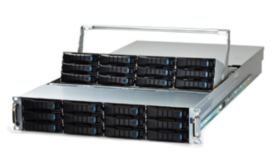
- Can be purchased as software and installed in a bare metal server powered by Intel Xeon.
- Supports virtual machine deployments in VMware ESXi, Linux KVM, and Amazon Web Services.
The Bastion SDR ensures ease of use and provision of technical support.
- Router configuration can happen through Linux, the CLI, and APIs for integration with third-party management tools and orchestrators.
- Can be configured by users as easy as they would browse a file system.
- Supports automation and zero-touch deployment
- Supports all the required protocol operations to read and write the configuration.
- Documentation and technical support are easily available.
- Bastion provides technical training for network admins and IT staff for configuration and maintenance of the router.
- Among other virtual router software brands, the Bastion SDR allows you to upgrade your business to high performance, programmable software that has the ability and capacity to cope with the fast-changing needs of modern IT systems.

Bastion Payment Systems can even help you decide on the specs that would suit your business. And whichever virtual router you choose, considering its specs and capacities, the investment you will make is a sure future proof of investment. Virtual routers will allow you to move to a higher-performing one if needed in the future. This way, you would not need to purchase bulks of hardware routers to cope up with the constant digital transformation, the continuing rise in traffic surge, the requirement for upgraded applications, and many more. You can start small now and then expand and grow gradually by upscaling the virtual environment. Virtual routers are cutting-edge technology that would give businesses and other end-users their future edge routing needs and demands.
In this era of the information revolution and digital transformation, the development of future technologies and upgrading outdated devices are both inevitable. So make it your company’s goal to secure future proof of investment! With the Bastion SDR, you’ll get top-quality, high-performance, software-defined router. Bastion can even help you visualize what specs you’ll need that is within your means and budget. To know more about the product,click here to be directed to our home page and request for a quotation to be sent to your email. As Bastion continuous to enhance business with world-class business solutions, it is guaranteed that you’ll get the best deal Bastion can offer!