When it comes to ransomware, the problem isn't just the encryption. The real threat is how it works and operates: the stages which can cost your data.
Ransomware doesn't just appear out of nowhere and lock your files instantly. It's a multi-stage attack that unfolds in phases. But in reality it's a process—a quiet, calculated march that allows hackers to get in, stay unseen, and move silently through system. This process gives organizations and staffing firms (IDI or services) an advantage in preparing and preventing ransomware operations.
The 4 Stages of a Ransomware Attack (and Where Most Companies Miss It)
1. Pre-Recognition: The Quiet Setup
This is where the attacker moves quietly—deleting backups, injecting code into trusted apps, and disabling security tools.
Key early-stage warning signs include:
- Shadow copy deletions (disabling recovery)
- Process injection (hiding malware in legit programs)
- Service termination (killing your AV or EDR)
If you detect these IOCs early, you can stop the attack. But most companies don’t see these red flags until it’s too late.
2. Encryption: The Lockdown Begins
Once they’re ready, ransomware encrypts files—sometimes in minutes, sometimes over days. Either way, by this stage, your data is already gone.
3. Post-Recognition: The Ransom Drop
The Ransom Drops Attackers leave a note. You face a choice: pay, or try to recover—without backups, with disabled defenses, and with angry customers.
So, What Can You Do?
That’s where continuous ransomware validation comes in.
It’s like a dress rehearsal for a real-world attack. You simulate what a ransomware operator would do—step by step. You don’t just wait for a threat to appear; you actively check whether your defenses would catch it. Imagine running a test that:
- Attempts shadow copy deletion (did your system alert?)
- Injects code into a process (was it detected?)
- Tries to disable your EDR (was it blocked?)
If any part of your defense misses these steps—you know exactly where to improve. That’s the power of proactive validation.
Where Cyber 2.0 Fits In
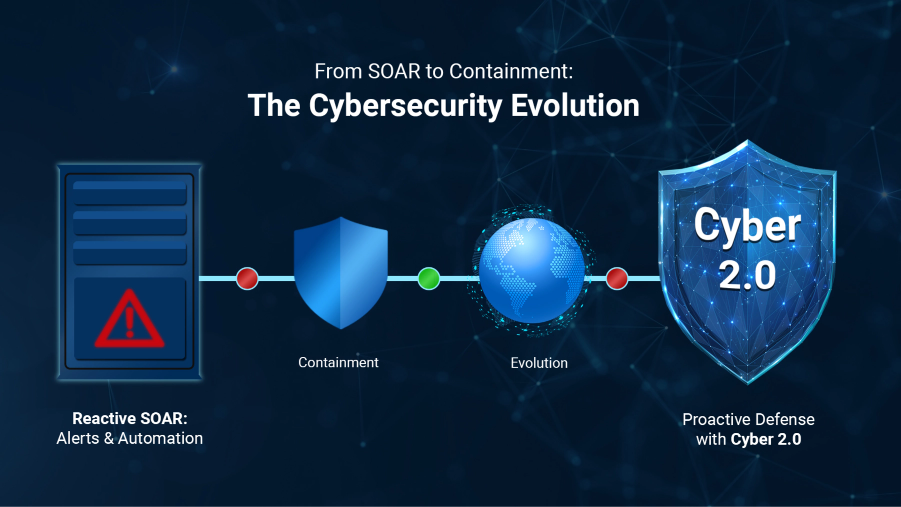
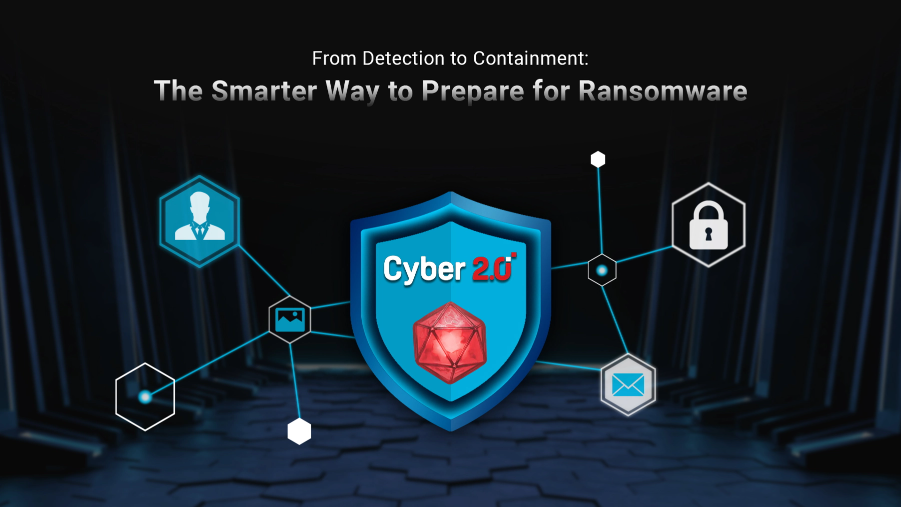
While tools like EDR and XDR detect attacks, Cyber 2.0 prevents them from spreading. It’s built with a containment-first mindset that blocks ransomware in its earliest phase—even if no signature exists yet.
Here’s how it enhances your ransomware strategy:
✅ Stops lateral movement before encryption can propagate
✅ Isolates endpoints showing suspicious behavior, instantly
✅ Works without updates, detecting unknown behavior patterns
✅ Reinforces gaps where traditional tools fall short
Cyber 2.0 is not just another tool in the stack—it’s your safety net when detection misses the first shot.
Annual Testing Isn't Enough Anymore
Ransomware evolves monthly. If you're only testing once a year, your security strategy is outdated 11 months of the year. Continuous validation isn’t a luxury anymore—it’s a necessity. It’s about being ready for every stage of the ransomware lifecycle, not just responding to the ransom note.
Final Thoughts
The best ransomware defense today is layered: detection, containment, and validation.
Tools like Cyber 2.0 make sure that even when something slips through, it goes nowhere. And validation ensures your entire security stack isn’t just installed—it’s actually working.
Don’t wait for a breach to realize what your tools didn’t catch. Validate them now. Contain threats before they spread. And become ransomware ready—today.
Let’s Talk, If you want to explore how Bastion Inc. can help secure your organization with proactive, modern cybersecurity like Cyber 2.0—let’s connect.
📩 Send us a message or visit www.bastion.inc for more details.
📰 Stay informed in today’s fast-moving digital world—You can join our Viber community by clicking the link or scanning the QR code below!
https://tinyurl.com/BASTIONCYBERCONNECT

References
Raywood, D. (2024, April 29). Reckless Rabbit and Ruthless Rabbit scams snare money and information. SC Media UK.
https://in.scmagazineuk.com/reckless-rabbit-and-ruthless-rabbit-scams-snare-money-and-informationWise, D., Biasca, P., & da Rocha, L. (2024, April 29). Uncovering actor TTP patterns and the role of DGA in investment scams. InfoBlox.
https://blogs.infoblox.com/threat-intelligence/uncovering-actor-ttp-patterns-and-the-role-of-dga-in-investment-scamsThe Hacker News. (2024, May 7). New investment scams use Facebook ads, RDGA domains, and IP checks to filter victims.
https://thehackernews.com/2024/05/new-investment-scams-use-facebook-ads.htmlFintechnews.ph. (2024, March 5). SEC issues warning on deepfake investment scams in Philippines.
https://fintechnews.ph/69665/security/sec-warns-of-deepfake-scams-in-philippinesPhilippine News Agency. (2024, January 31). Scam complaints triple in 2024 – DICT.
https://www.pna.gov.ph/articles/1143401