Introduction
Firewalls were once the go-to solution for protecting computers and networks. They were straightforward, reliable, and easy to grasp. However, the rise of artificial intelligence (AI) in cyberattacks has changed the game. Today’s threats are smarter, faster, and more adaptive, making traditional firewalls less effective. This article explores why firewalls are struggling, what modern security looks like, and why this matters, especially in regions like the Philippines facing growing cyber threats.
The Limitations of Traditional Firewalls
How Firewalls Work
Traditional firewalls function like security guards at a building’s entrance. They check incoming traffic against a list of known threats, IP addresses, and predefined rules. If something matches the “bad” list, it’s blocked. This worked well when threats were predictable and followed set patterns (Huawei, 2021)
Why They’re Falling Short
Today’s cyberattacks, powered by AI, are far more sophisticated. Here’s why firewalls are struggling:
- AI-Powered Attacks Adapt Quickly: AI-driven attacks can change tactics in real time, bypassing static firewall rules. For example, next-generation firewalls (NGFWs) rely on signatures and rules, which can’t keep up with novel threats (OneC1, 2024).
- No Single Perimeter to Protect: With remote work, cloud services, and mobile devices, data is spread across many locations. There’s no single “wall” to guard, rendering perimeter-based firewalls less effective (Deepchecks, 2024).
- Weak Against Internal Threats: Once attackers breach the network, firewalls can’t stop them from moving laterally or exploiting insider vulnerabilities (ISC2, 2024).
| Firewall Limitation | Why It's a Problem | Example |
|---|---|---|
| Static Rules | Can’t adapt to AI-driven, evolving attacks | Hackers disguise malware to bypass rules |
| Perimeter-Based | Ineffective with cloud and remote work | Data in cloud isn’t behind a single “wall” |
| No Internal Protection | Fails to stop insider or lateral threats | Attackers move freely once inside |
Modern Security Solutions
The Shift to Adaptive Security
Modern cybersecurity focuses on adaptability and behavior analysis. Instead of relying on known threat lists, new tools monitor for unusual activity and respond proactively. This approach is better suited to counter AI-driven threats that evolve rapidly.
Key Features of Modern Security
Here are the core elements of today’s security systems:
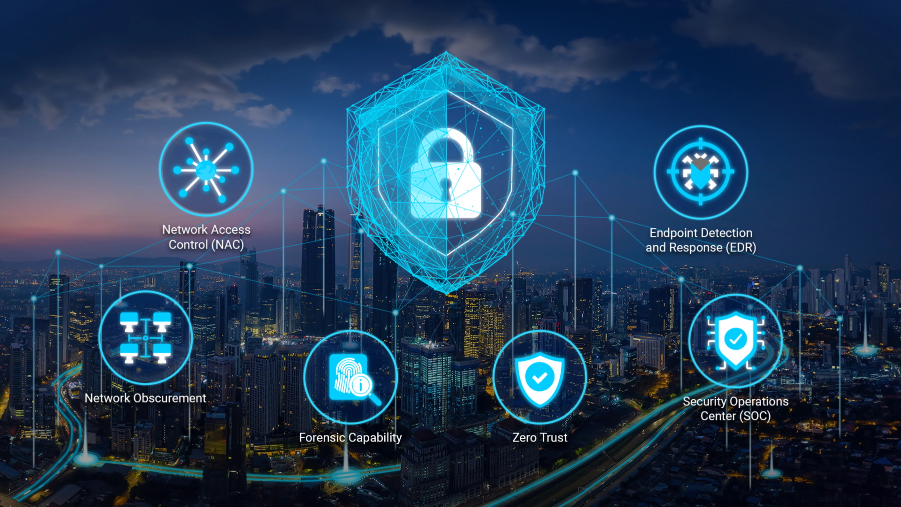
- Zero Trust Architecture: This approach assumes no one and nothing is trustworthy by default. Every user, device, and connection must be verified, regardless of location. Zero Trust reduces breach risks by limiting access and continuously validating security (Microsoft Learn, 2025).
- Real-Time Anomaly Detection: These systems spot odd behavior, like unusual login attempts, and act immediately to block threats before damage occurs (StrongDM, 2025).
- No Reliance on Updates: Unlike traditional firewalls, modern tools don’t need constant updates to recognize new threats. They block unknown attacks by analyzing patterns (Huawei, 2021).
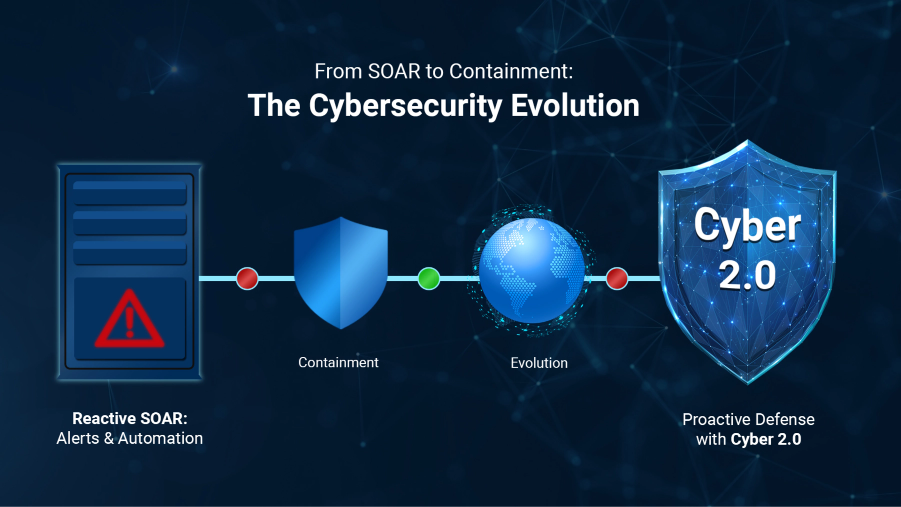
- Containment Over Detection: The focus is on stopping threats from spreading, not just detecting them. This minimizes damage even if a breach occurs (Cyber 2.0).
Spotlight on Cyber 2.0
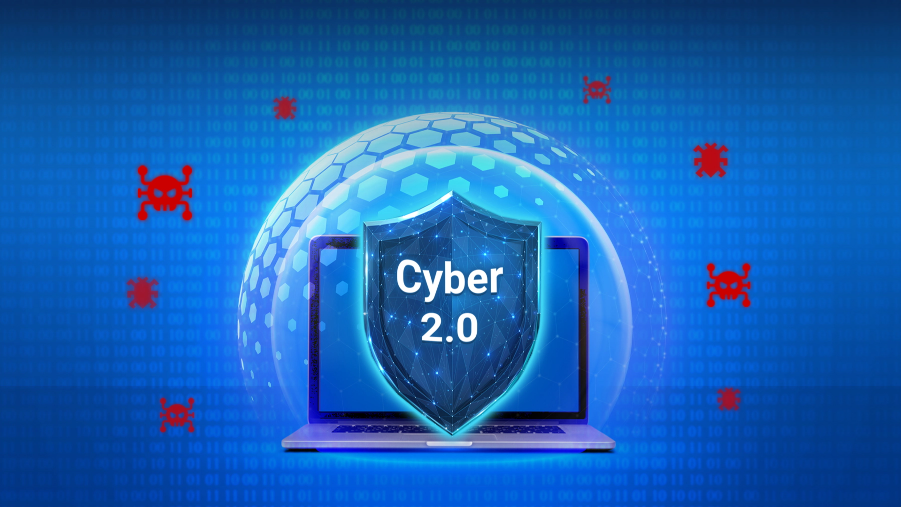
A leading example is Cyber 2.0, a system that uses chaos theory to create unpredictable communication paths between devices. Chaos theory, a mathematical concept dealing with complex, unpredictable systems, ensures that even if a hacker compromises one device, they can’t easily navigate to others. Cyber 2.0 is confident to block all cyberattack types, including new and unfamiliar ones, by focusing on prevention rather than detection (Cybersecurity Intelligence).
| Modern Security Feature | How It Works | Benefit |
|---|---|---|
| Zero Trust | Verifies every user/device | Reduces unauthorized access |
| Anomaly Detection | Spots unusual behavior | Stops threats early |
| No Update Reliance | Blocks unknown threats | Stays ahead of new attacks |
| Containment | Limits threat spread | Minimizes damage |
Why This Matters in 2025
Rising Cyber Threats in the Philippines
The Philippines and Asia-Pacific are seeing a sharp rise in cyberattacks. Reports highlight increased phishing, ransomware, and business email compromise, driven by geopolitical tensions and digitalization. For instance, the Philippines faced over 8,800 attacks daily in early 2024, a fourfold increase from 2023 (Lumify Work, 2024). The Department of Information and Communications Technology (DICT) and National Bureau of Investigation (NBI) have noted these trends, especially ahead of the 2025 elections (Philippine News Agency, 2024).
The Cloud and Expanded Vulnerabilities
As businesses move to the cloud, the attack surface grows. Cloud systems, remote work, and IoT devices create more entry points for attackers. Traditional firewalls, designed for on-premises networks, can’t fully protect these distributed environments (Cyberint, 2025).
The Path Forward
Firewalls aren’t useless—they’re just outdated for today’s threats. AI-powered attacks require AI-powered defenses. Tools like Cyber 2.0 complement existing systems, adding a layer of proactive protection. Organizations should adopt Zero Trust, anomaly detection, and containment-focused strategies to stay secure.
Ready to rethink your cybersecurity? Explore how Cyber 2.0 fits into a modern, Zero Trust strategy.
Let’s Talk, If you want to explore how Bastion Inc. can help secure your organization with proactive, modern cybersecurity like Cyber 2.0—let’s connect.
📩 Send us a message or visit www.bastion.inc for more details.
📰 Stay informed in today’s fast-moving digital world—You can join our Viber community by clicking the link or scanning the QR code below!
https://tinyurl.com/BASTIONCYBERCONNECT

Key Citations
- The Continued Evolution of Firewalls: From Next-Generation to AI-Based Firewalls
- What Is an AI Firewall? AI Firewalls vs. NGFWs
- What is AI Firewall? The Need & Benefits
- Zero Trust Architecture: Building a Resilient Cybersecurity Framework
- What is Zero Trust?
- What Is Zero Trust Architecture? Zero Trust Security Guide
- Cyber 2.0: Unstoppable Cybersecurity Solutions
- Cyber 2.0 - Cybersecurity Intelligence
- Know the cyber threats Philippines will face in 2025
- 2024-2025 Budget: Cyber Security Meets Philippine Skills Framework
- Philippine Threat Landscape Report 2024-2025
- PH faces heightened cyberattacks in upcoming elections