Your office printer might seem like a simple tool for printing documents, but it could be a weak link in your cybersecurity. A critical security flaw, known as CVE-2024-51978, affects millions of Brother printers, scanners, and label makers, allowing hackers to guess the default administrator password and take control of the device. This flaw, discovered in 2025, could let attackers access your network, steal sensitive information, or spread harmful software. Even worse, it can’t be fixed with a simple software update because it’s built into how the devices are made (Culafi, 2025; Kovacs, 2025). This article explains the risks, why traditional defenses aren’t enough, and how modern solutions like Cyber 2.0 can help keep your network safe.
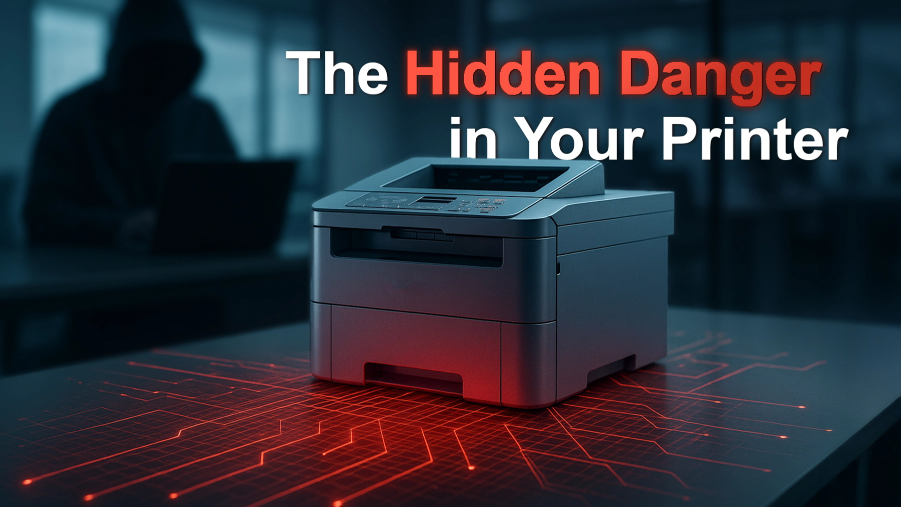
The Hidden Danger in Your Printer
Printers, scanners, and label makers are common in offices, warehouses, and even homes, but when connected to a network or the internet, they become targets for hackers. The CVE-2024-51978 flaw lets attackers figure out the default admin password using the device’s serial number, giving them full control. From there, they can:
- Steal Documents: Access files sent to the printer, like contracts or personal data.
- Install Malware: Plant harmful software to attack other devices on your network.
- Launch Broader Attacks: Use the printer as a gateway to target other systems.
This flaw affects 689 Brother models and some printers from FUJIFILM, Ricoh, Toshiba, and Konica Minolta, totaling 748 models across five brands (Rapid7, 2025). Other vulnerabilities found at the same time allow hackers to crash devices, steal sensitive information, or make unauthorized connections, making these devices even more dangerous (Kovacs, 2025).
| Risk from Printers | What it Means | Why it's Dangerous |
|---|---|---|
| Default Password Access | Hackers guess admin password | Full control of the printer |
| Malware Installation | Plants harmful software | Spreads to other Devices |
| Network Gateway | Entry point to your network | Attacks critical systems |
Why This Flaw Is Hard to Fix
Most security issues can be fixed with a software update, but CVE-2024-51978 is different. The default password is created during manufacturing based on the printer’s serial number, using a process that can’t be changed with a software patch. Fixing it requires Brother to alter how they make their devices, which could take years (Rapid7, 2025). In the meantime, these printers remain vulnerable, especially if left with default settings or connected to the internet.
Other issues found include:
- Data Leaks: Hackers can retrieve sensitive information from the printer.
- Device Crashes: Attackers can make the printer unusable.
- Unauthorized Connections: Printers can be forced to connect to harmful networks or services.
These vulnerabilities highlight how even “simple” devices can pose big risks if not properly secured (Vijayan, 2024).
Why Traditional Defenses Fall Short
Traditional security tools, like antivirus programs and firewalls, rely on lists of known threats to spot problems. But new or “zero-day” attacks, like those exploiting CVE-2024-51978, can slip through because they’re not yet on those lists. Once a hacker gains access to a printer, they can move to other devices on the network, steal data, or install ransomware, often before traditional tools notice (Dark Reading, 2024). Past incidents with Canon and HP printers showed similar risks, where hackers used compromised printers to run unauthorized commands or steal data (Sharp, n.d.).
A Smarter Defense with Cyber 2.0
To combat these risks, businesses need tools that don’t just look for known threats but stop suspicious activity in its tracks. Cyber 2.0 is one such solution, designed to protect networks by:
- Watching Behavior: It monitors how devices act and blocks anything unusual, like a printer trying to connect to a strange website.
- Zero Trust: It assumes nothing is safe, requiring every device and user to prove their identity.
- Network Scrambling: It uses a “Chaos Engine” to make network communication unreadable to hackers, preventing them from moving through your systems.
- Full Monitoring: It provides a central dashboard with alerts, logs, and tracking to spot and investigate issues quickly.
Cyber 2.0 claims to block all types of cyberattacks, even new ones, by focusing on behavior rather than known threats. While promising, its effectiveness needs more real-world testing to confirm its claims (Cybersecurity Intelligence, n.d.).
| Cyber 2.0 Feature | How it Helps | Why it's Different |
|---|---|---|
| Behavioral Monitoring | Spots unusual activity | Catches new threats |
| Zero Trust | Verifies every device | Stops unauthorized access |
| Network Scrambling | Confuse hackers | Prevents network movement |
| Central Dashboard | Tracks and logs activity | Quick response to issues |
Real-World Example
Picture an office with a Brother printer vulnerable to this flaw. A hacker guesses the admin password and tries to use the printer to attack other devices. With Cyber 2.0, the system notices the printer acting strangely, blocks its actions, and alerts the IT team. The team can then trace the attack back to the printer and isolate it, preventing any damage. This kind of proactive defense is critical when hardware flaws can’t be patched quickly.
What You Can Do
To protect your network:
- Change Default Passwords: Set a strong, unique password for your printer if possible.
- Update Firmware: Check Brother’s support page for firmware updates that may reduce risks.
- Isolate Printers: Keep printers on a separate network from critical systems to limit damage.
- Use Advanced Security: Tools like Cyber 2.0 can monitor and block threats from devices like printers.
- Train Your Team: Teach employees to avoid connecting printers to unsecured networks.
Why This Matters in 2025
As more devices connect to the internet, from printers to smart thermostats, the risk of cyberattacks grows. In the Philippines, where web attacks are among the highest globally, businesses can’t afford to overlook devices like printers (Antivola, 2023). This flaw shows that even everyday office tools can be a gateway for hackers, making modern, proactive security essential.
The Path Forward
Traditional antivirus and firewalls aren’t enough to protect against unpatchable flaws like CVE-2024-51978. Solutions like Cyber 2.0 offer a smarter way to stay safe by focusing on behavior and Zero Trust principles. While no tool is perfect, combining these modern defenses with basic steps like changing passwords and updating firmware can keep your network secure.
Let’s Talk, If you want to explore how Bastion Inc. can help secure your organization with proactive, modern cybersecurity like Cyber 2.0—let’s connect.
📩 Send us a message or visit www.bastion.inc for more details.
📰 Stay informed in today’s fast-moving digital world—You can join our Viber community by clicking the link or scanning the QR code below!
https://tinyurl.com/BASTIONCYBERCONNECT

References
Antivola, M. H. L. (2023, October 26). Increasing cyberattacks prompt need for fast, frequent penetration testing, expert tells businesses. BusinessWorld Online. https://www.bworldonline.com/technology/2023/10/26/553979/increasing-cyberattacks-prompt-need-for-fast-frequent-penetration-testing-expert-tells-businesses/
Culafi, A. (2025, June 26). Millions of Brother Printers Hit by Critical Unpatchable Bug. Dark Reading. https://www.darkreading.com/endpoint-security/millions-brother-printers-critical-unpatchable-bug
Kovacs, E. (2025, June 26). New vulnerabilities expose millions of Brother printers to hacking. SecurityWeek. https://www.securityweek.com/new-vulnerabilities-expose-millions-of-brother-printers-to-hacking
Rapid7. (2025, June 25). Multiple Brother Devices: Multiple Vulnerabilities (FIXED). Rapid7 Blog. https://www.rapid7.com/blog/post/multiple-brother-devices-multiple-vulnerabilities-fixed/
Sharp. (n.d.). Printer Security: The Hidden Cybersecurity Threat. Sharp USA. https://business.sharpusa.com/portals/0/documents/sharp-printer-security.pdf
Vijayan, J. (2024, October 16). Hybrid work exposes new vulnerabilities in print security. Dark Reading. https://www.darkreading.com/vulnerabilities-threats/hybrid-work-vulnerabilities-print-security
Cybersecurity Intelligence. (n.d.). Cyber 2.0 - Cybersecurity Intelligence. https://www.cybersecurityintelligence.com/cyber-20-unstoppable-cybersecurity-solutions-6142.html