In recent months, a highly targeted and sophisticated phishing campaign known as Operation SalmonSlalom has been sweeping across the Asia-Pacific (APAC) region. Government agencies and industrial sectors in countries like the Philippines, Malaysia, Japan, and Singapore have found themselves in the crosshairs—hit by a malware family called FatalRAT.
This malware isn’t new—but the delivery method is smarter, stealthier, and more persistent than ever before. The attackers cleverly used legitimate Chinese cloud services, like MyQCloud and Youdao Notes, to sneak malicious files into systems without raising red flags.
The Problem: Smarter Attacks, Slower Defenses
Let’s be honest. Most companies today rely heavily on tools like antivirus software, email filters, and even Endpoint Detection and Response (EDR). While these are essential parts of any cybersecurity strategy, they’re often reactive—they detect threats only after they’ve made it inside.
In the case of FatalRAT, once the malware is in, it can:
- Log keystrokes
- Steal or delete confidential files
- Corrupt your system’s core (MBR)
- Install remote access tools like AnyDesk
- Gather sensitive information on your system and bypass security
All this happens before your traditional solutions even raise an alert.
Why This Matters to Business Leaders
Imagine this scenario:
- A single employee clicks a link in a disguised ZIP file
- Malware installs silently, bypasses firewalls and antivirus
- Your organization’s confidential data is compromised or destroyed
- Operations are disrupted, customers lose trust, and reputational damage follows
The takeaway? Cyberattacks like FatalRAT are no longer just an IT problem—they're a business problem.
What Needs to Change: From Detection to Containment
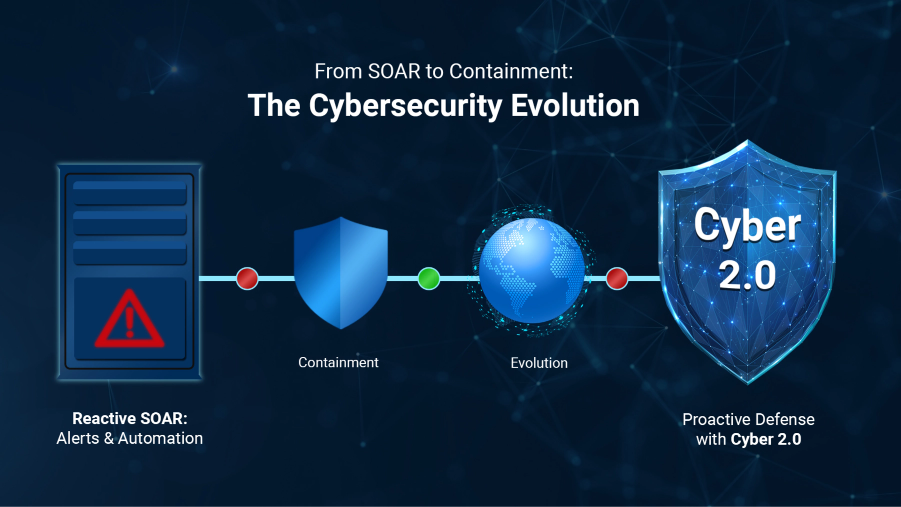
The modern threat landscape demands a prevent-first mindset—not just detection after damage is done. Instead of relying on identifying a threat after it has entered, companies need to stop it from spreading at all.
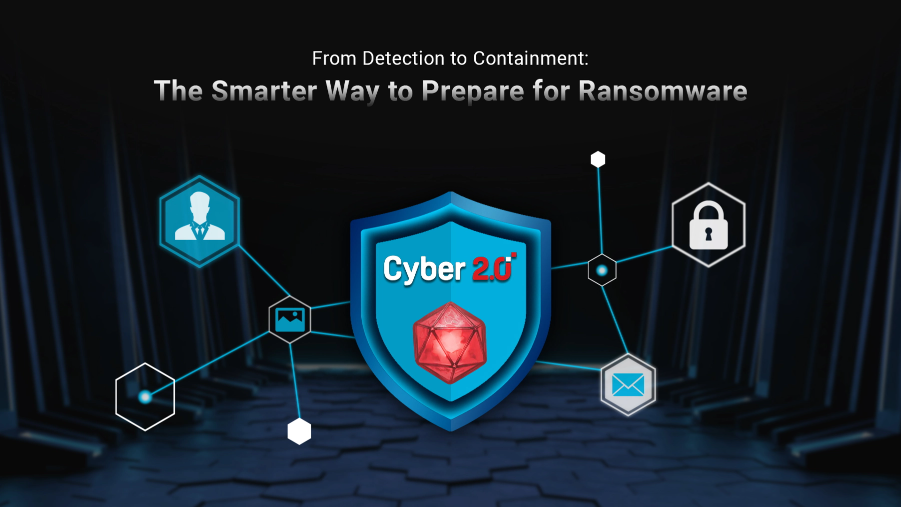
This is where proactive containment strategies come into play. Some modern solutions—like Cyber 2.0—are built on this very principle.
Unlike traditional tools, Cyber 2.0 doesn’t rely on malware signatures or sandbox behavior. It uses a mathematical chaos-based model to prevent the lateral movement of any unauthorized activity across a network.
So even if an employee accidentally opens a malicious file, Cyber 2.0 ensures:
- The malware doesn’t move beyond that single device
- No data is stolen or encrypted
- The rest of your business stays fully operational
What Makes a Solution ‘Right’ for APAC Right Now
With multilingual, multi-stage attacks on the rise—especially ones targeting countries with shared linguistic and operational frameworks—the right cybersecurity solution must be:
- Simple to deploy (no need for a large SOC team)
- Lightweight and compatible with legacy and IoT systems
- Designed to function in multilingual environments
- Able to operate independently of constant updates
Cyber 2.0 checks all these boxes—and it’s already proving effective in industries like healthcare, logistics, education, and critical infrastructure across the region.
A Smarter Threat Needs a Smarter Defense
Operation SalmonSlalom is just one example of a growing reality: attackers are getting smarter. They’re using real platforms, crafting convincing phishing emails, and targeting industries that can’t afford downtime.
It’s time to evolve our defenses accordingly. APAC businesses can no longer afford to wait for an alert before acting—they need solutions that assume compromise is inevitable, but breach is preventable.
Let’s Talk, If you want to explore how Bastion Inc. can help secure your organization with proactive, modern cybersecurity like Cyber 2.0—let’s connect.
📩 Send us a message or visit www.bastion.inc for more details.
📰 Stay informed in today’s fast-moving digital world—You can join our Viber community by clicking the link or scanning the QR code below!
https://tinyurl.com/BASTIONCYBERCONNECT

References
Akamai. (2023, November 8). 6 Strategies to Combat Advanced Persistent Threats. https://www.akamai.com/blog/security/6-strategies-to-combat-advanced-persistent-threats
Cyber 2.0. (n.d.). Cyber 2.0: Unstoppable Cybersecurity Solutions for IT, OT, and Connected Cars – Complete Defense Against Cyber Threats. https://cyber20.com/
Cybersecurity Intelligence. (n.d.). Cyber 2.0. https://www.cybersecurityintelligence.com/cyber-20-3448.html
Kaspersky ICS CERT. (2025, February 24). Operation SalmonSlalom | Kaspersky ICS CERT. https://ics-cert.kaspersky.com/publications/reports/2025/02/24/fatalrat-attacks-in-apac-backdoor-delivered-via-an-overly-long-infection-chain-to-chinese-speaking-targets/
Kaspersky IT Encyclopedia. (2015, May 12). Strategies for Mitigating Advanced Persistent Threats (APTs). https://encyclopedia.kaspersky.com/knowledge/strategies-for-mitigating-advanced-persistent-threats-apts/
ReliaQuest. (2025, February 15). Mastering Containment: A Guide to the Most Critical Phase of Incident Response. https://reliaquest.com/cyber-knowledge/incident-response-containment/
RiskRecon. (2024, January 9). Cyber Incident Response: Containment. https://blog.riskrecon.com/cyber-incident-response-containment
ScienceDirect Topics. (n.d.). Containment Strategy - an overview | ScienceDirect Topics. https://www.sciencedirect.com/topics/computer-science/containment-strategy
The Hacker News. (2025, February 25). FatalRAT Phishing Attacks Target APAC Industries Using Chinese Cloud Services. https://thehackernews.com/2025/02/fatalrat-phishing-attacks-target-apac.html
TrueFort. (2024, January 8). Advanced Persistent Threats (APTs): 2024 Identification and Response Tactics TrueFort. https://truefort.com/advanced-persistent-threats/